

Güneş Terkol showcases ‘Epipe’, an exhibition of her work created with a Salt Artistic Research Grant
Artist Güneş Terkol’s exhibition Epipe opened on January 29 and will be on display at Salt Galata (Istanbul) until March 8. Terkol is one of the two recipients of the second edition of the Salt Artistic Research and Production Grant Program, organized in collaboration with the BBVA Foundation and geared toward artists from Türkiye who investigate contemporary social questions through interdisciplinary approaches.
2 February, 2026
Epipe is the culmination of an oral history and archival research project that Terkol has been working on with her mother, Elmira Terkol, since 2002. The artist weaves together earlier and newly produced works with materials distilled from this research, which traces the multi-stage migration of the Kazan Tatars beginning in the late 19th century, from Russia to China and eventually to Türkiye. Combining drawing, animation, and stitching, she develops a layered audio-visual narrative around migration routes, family recollections, and exchanges across geographies and generations.
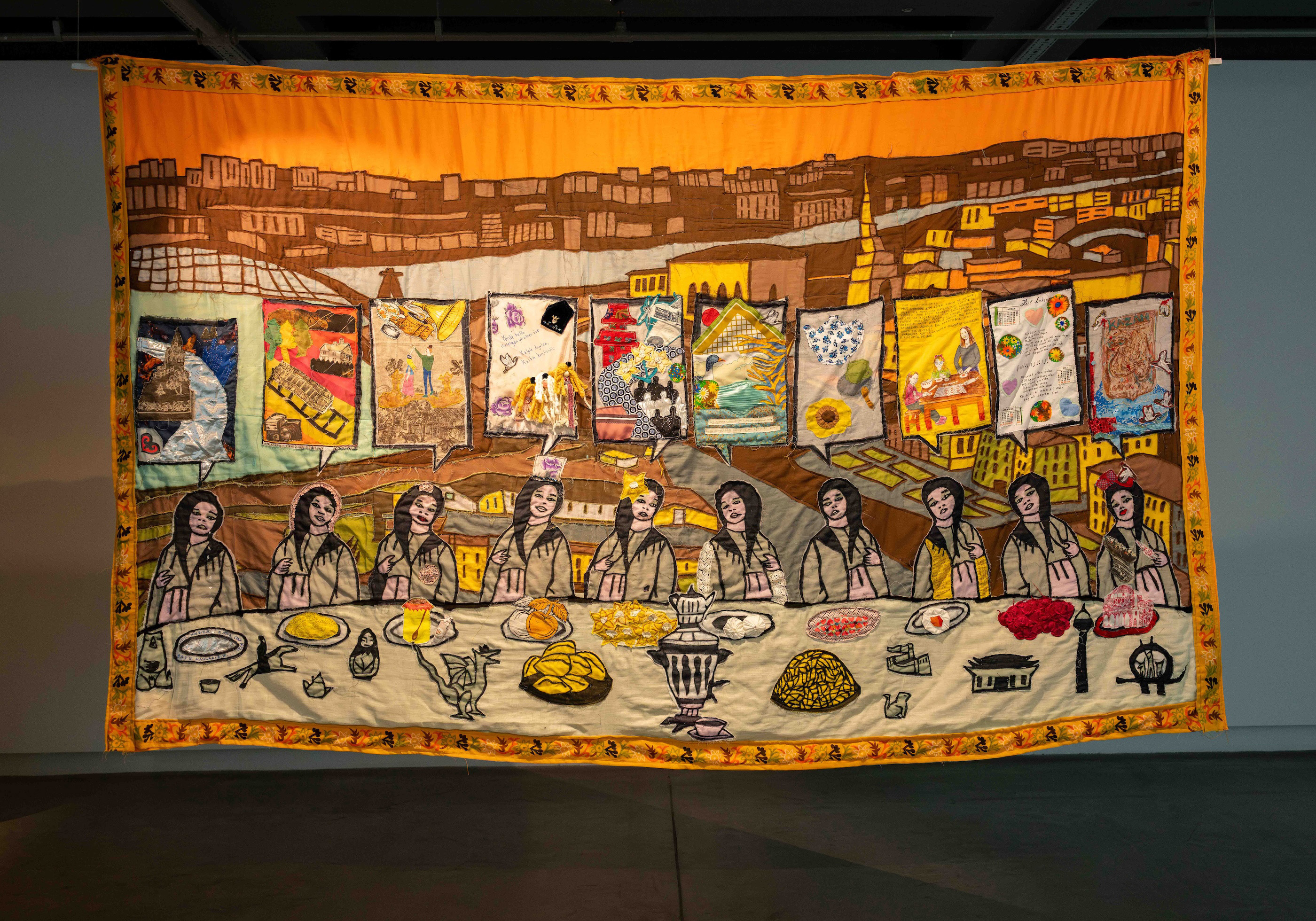
Güneş Terkol, Anabala, 2025. Photo: Metean Bars (Salt)
During the preparations for the exhibition over the past year, a series of research trips took place, including visits to the Forum of Tatar Women in Kazan and the Sabantuy Festival in Eskişehir. These encounters involved listening to numerous migration stories, conducting video interviews, and bringing family heirlooms and photo albums out of chests. The final stage of this research was a sewing workshop held at the Kazan Culture and Solidarity Association in Ankara, with the participation of Tatar women who had migrated from China. As in other workshops led by the artist with women across different countries, this process offered space for personal stories to take shape within a collective narrative. Participants’ reflections on migration, belonging, and family memory were woven into fabrics and transformed into a banner, accompanied by traditional Tatar songs.
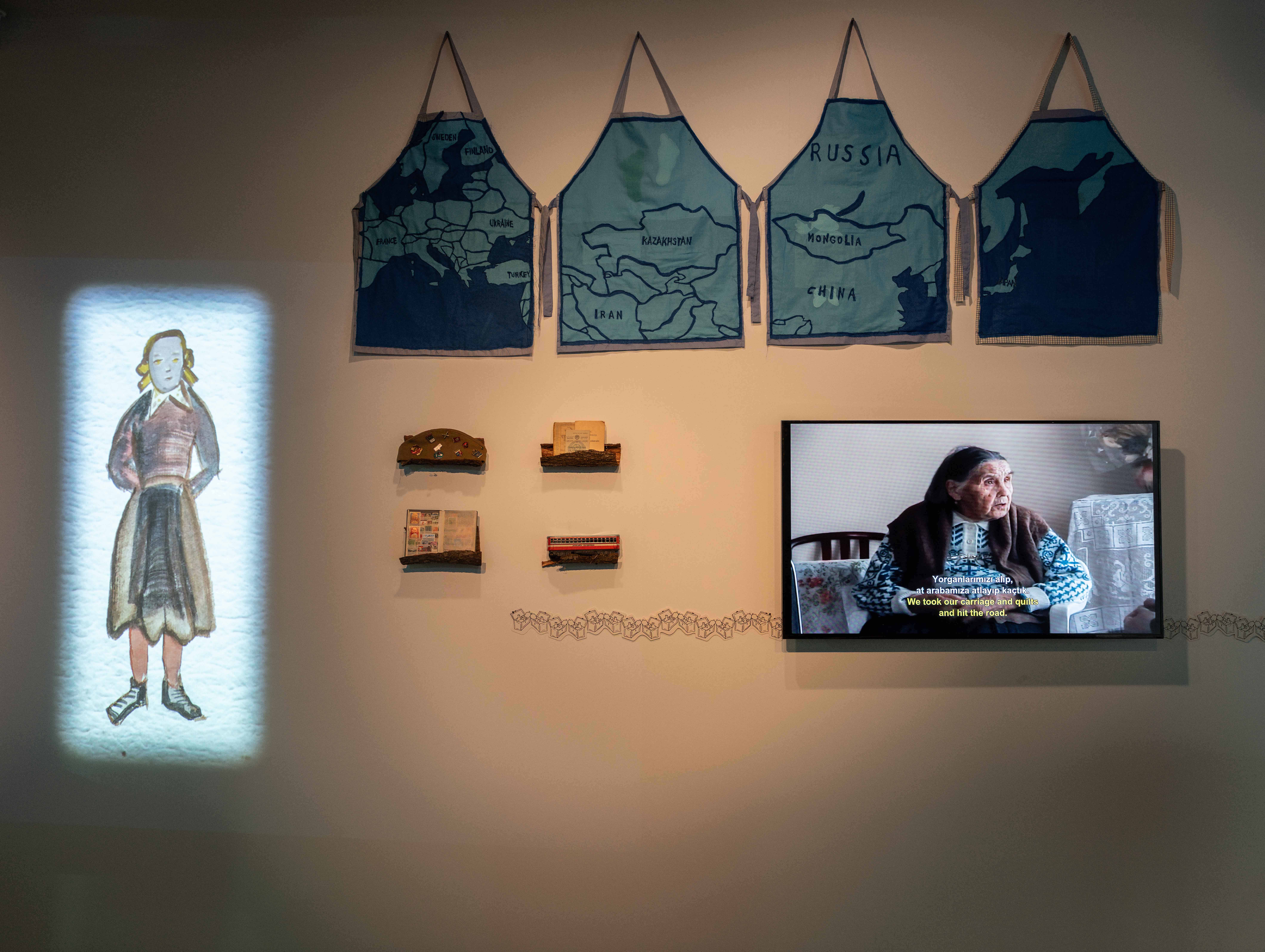
Installation view from Güneş Terkol’s exhibition ‘Epipe’, Salt Galata, 2025. Photo: Metean Bars (Salt)
Epipe takes its name from a well-known Tatar folk song that depicts a dancing female figure, evoking both the memory and vitality of a community that has witnessed several historical shifts, from wars and occupations to economic crises and regime changes. Modes of production, forms of coexistence, and embodied practices preserved through forced displacements coalesce into a repertoire of intergenerational experience, labor, and resilience.